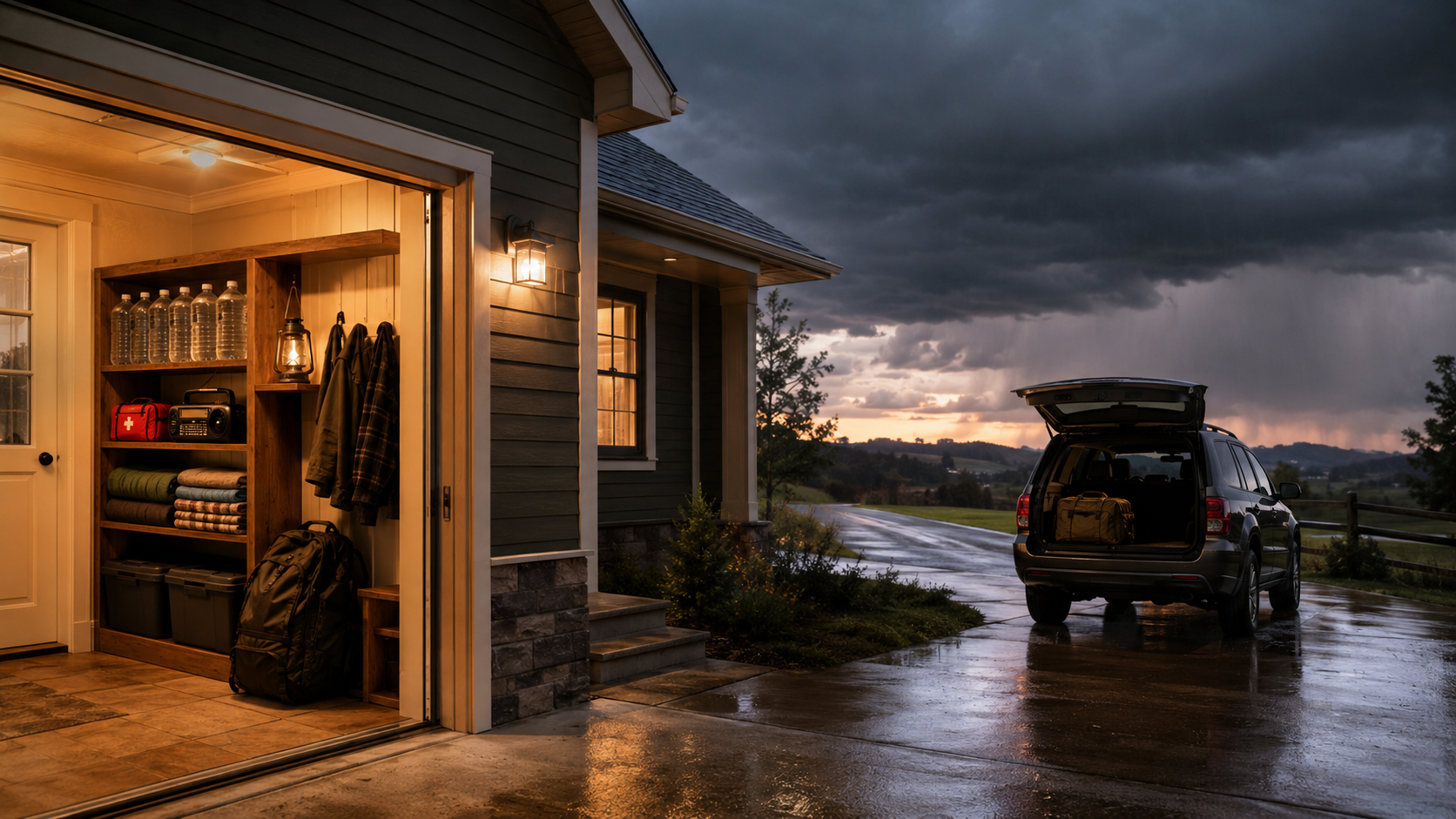
Preparedness conversations often focus on getting out: pack a bag, load the vehicle, and put distance between your household and the emergency.
Sometimes that is exactly the right decision. Other times, leaving a secure home places you on crowded or damaged roads, separates you from supplies, and trades a familiar environment for an uncertain destination.
Bugging in means remaining at home because it is currently the safer, more sustainable option. It does not mean ignoring danger, refusing an evacuation order, or staying after the home itself has become unsafe.
THE FIRST RULE: FOLLOW OFFICIAL INSTRUCTIONS
If local authorities order an evacuation, leave as directed. If they tell residents to shelter in place, follow the instructions for that specific emergency.
Conditions can change faster than information travels through social media. Use local emergency alerts, weather radio, public-safety announcements, and other official sources when making the decision.
Your preparedness plan gives you options. It does not replace current information from people managing the emergency.
BUGGING IN IS NOT ALWAYS THE SAME AS SHELTERING IN PLACE
The terms are often used interchangeably, but they can describe different actions.
Bugging in is the broader decision to remain at home during a disruption because the house and surrounding area remain reasonably safe.
Sheltering in place is often a specific protective instruction. Depending on the hazard, officials may direct you to move to an interior room, avoid windows, close doors and vents, or limit outside air. Tornadoes, chemical releases, severe weather, and other emergencies require different sheltering actions.
Do not use one universal sheltering procedure for every hazard. Follow the instructions provided for the event occurring in your area.
WHEN STAYING HOME MAY BE SAFER
Bugging in may be the better choice when:
• No evacuation order has been issued.
• Your home is structurally sound and is not in the direct path of fire, flooding, hazardous materials, or another immediate threat.
• The danger is primarily outside and your home provides meaningful protection.
• Roads are damaged, blocked, congested, or more hazardous than remaining where you are.
• Your household has the water, food, medications, sanitation supplies, and temperature control needed to remain safely.
• Children, older adults, pets, or household members with disabilities can be supported more safely at home.
• You can continue receiving reliable information and are prepared to reassess the situation.
Staying home is not the same as doing nothing. A successful bug-in requires active monitoring, safe use of supplies, communication with household members, and clear conditions that would cause you to leave.
WHEN IT IS TIME TO LEAVE
Leave when:
• Authorities issue an evacuation order.
• Fire, rising water, hazardous materials, or another threat is approaching the property.
• The building has structural damage, a gas leak, fire, dangerous smoke, or unsafe carbon-monoxide levels.
• Essential medical needs can no longer be supported at home.
• Loss of heat, cooling, water, sanitation, or power is creating a dangerous condition.
• Your planned evacuation route and destination are available, but waiting longer could make departure more difficult.
• A household member is in immediate danger and remaining in place no longer offers adequate protection.
Do not wait for every household member to agree that conditions have become frightening enough. Decide your departure triggers before the emergency begins.
THE SIX-QUESTION DECISION CHECK
When conditions are changing, ask:
- What is the actual threat?
Identify the hazard rather than reacting only to rumors or general fear.
- What are officials instructing residents to do?
Check more than one reliable source whenever possible, but do not delay compliance with a clear emergency order.
- Is the house still safe and habitable?
Consider structure, fire, air quality, flooding, temperature, sanitation, water, and medical needs.
- Are the roads safer than the house?
Leaving is not automatically safer if travel routes pass through the hazard or are already blocked.
- Where are we going?
A destination, route, alternate route, and expected travel time should be part of the decision.
- What would make us change the plan?
Set specific warning signs that would cause the household to leave, relocate within the home, or call for help.
PREPARE FOR BOTH CHOICES
A good plan should not force you to choose between a well-stocked home and a vehicle packed for every imaginable disaster.
Start with supplies that support both choices:
• Drinking water and familiar, easy-to-prepare food
• Necessary medications and basic first aid
• Flashlights, batteries, chargers, and backup power banks
• A battery-powered or hand-crank radio
• Copies of identification, insurance information, medical details, and emergency contacts
• Cash, maps, keys, weather-appropriate clothing, and sturdy shoes
• Supplies for children, older adults, disabilities, and pets
Keep essential evacuation items together so they can be carried quickly. Maintain additional supplies at home for longer disruptions.
The American Red Cross uses three days of food and water for evacuation and two weeks for home preparedness as useful planning benchmarks. Those amounts do not have to appear overnight. Build toward them gradually, beginning with what your household is most likely to need.
SET YOUR TRIGGERS BEFORE THE EMERGENCY
Write down the conditions that would change your plan. Examples might include:
• An evacuation order is issued for our area.
• Fire, floodwater, or another hazard reaches a predetermined location.
• A medical device can no longer be operated safely.
• Indoor temperature can no longer be maintained safely.
• Our primary route closes, requiring us to use the alternate route immediately.
• Our home develops structural, fire, gas, smoke, or carbon-monoxide hazards.
Clear triggers reduce hesitation and arguments. They also prevent a decision made from convenience—“we would rather stay home”—from being mistaken for a decision based on safety.
STAY WHEN IT IS SAFER. LEAVE BEFORE YOU MUST.
The goal is not to prove that you can remain home through anything. It is also not to abandon a safe, useful shelter simply because leaving feels more dramatic.
Prepare your home so staying is a real option. Prepare your route and destination so leaving is also a real option. Monitor conditions, follow official instructions, and be willing to change the plan when the facts change.
Preparedness is not choosing bug-in or bug-out forever. It is building the judgment and resources to make the safer choice when the moment arrives.
OFFICIAL GUIDANCE AND FURTHER READING
Ready.gov — Shelter
https://www.ready.gov/shelter
Ready.gov — Evacuation
https://www.ready.gov/evacuation
Ready.gov — Make a Plan
https://www.ready.gov/plan
American Red Cross — Survival Kit Supplies
https://www.redcross.org/get-help/how-to-prepare-for-emergencies/survival-kit-supplies.html